The petroglyphs are really the reason that South Mountain Park is special…going into future generations that message needs to be shared.
By SMCC Student Briana Yellowhair
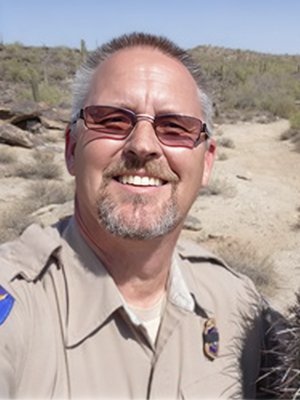
Dan Gronseth dedicated many years to South Mountain Park and Preserve in South Phoenix, serving as a Recreation Leader, Park Ranger, and Park Manager. He helped expand trails, protect the park’s natural areas, and create educational programs, ensuring the park remained a valued space for both nature and the community.
Gronseth moved to Arizona after college with a close friend, seeking a new adventure and a change of scenery. Upon arriving in Phoenix, he was immediately captivated by the desert landscape and the vibrant cultural diversity he found in Phoenix.
Reflecting on his first impressions, he said, “When I came out here everything was very interesting, and the different cultures here.”
The city’s natural beauty and strong sense of community inspired him to stay, and in 1987, he began working at South Mountain Park, marking the beginning of a career that would define his life and impact the local community.
Starting as a part-time Recreation Leader, Gronseth quickly became a Park Ranger and eventually rose to the position of Park Manager. Over his decades in the Phoenix Parks and Recreation system, he maintained trails, protected wildlife, and educated visitors about the park’s natural and cultural significance.
One of his most notable achievements was the development of the Judith Tunnel Trail, where he not only helped plan the route but also designed the trail signs and artwork. His dedication to conservation and public access reflected his belief that “South Mountain Park needs to be preserved for the future generations.” Through these efforts, Gronseth helped ensure the park remained a safe, enjoyable, and meaningful space for the community.
During the time of his career, Arizona was experiencing rapid population growth and urban expansion, particularly in the Phoenix area. South Phoenix, with its deep Indigenous roots and history of early mining settlements, faced pressure from new development that threatened open spaces and historical sites. Parks like South Mountain became more important, providing places for people to enjoy nature and also protect the land and its history.
South Mountain Park has a long history of Indigenous presence, especially from the Hohokam people, who lived in the area for hundreds of years before European settlement. The park contains ancient petroglyphs, trails, and other archaeological sites that reflect their culture and daily life, and Gronseth felt it needed to be protected.
Gronseth says, “The petroglyphs are really the reason that South Mountain Park is special…going into future generations that message needs to be shared”.
His work at the park reflects Arizona’s larger effort to manage city growth while protecting nature, making sure people could enjoy the outdoors and respect the area’s history.
Gronseth’s impact extended beyond the trails and facilities he managed. By focusing on education and community engagement, he fostered a deeper appreciation for the park among residents and visitors.
His initiatives strengthened the connection between the people of South Phoenix and the landscape, highlighting the park’s historical and ecological significance. Over the years, his leadership helped South Mountain Park remain not just a recreational area, but a living part of Arizona’s natural and cultural history.
His approach to conservation could be summed up in his words: “If you feel you have more to offer, stay with it,” pushing others to remain committed to protecting the park.
After nearly four decades in the park system, Dan Gronseth retired as Park Manager in June 2024. He continues to live in South Phoenix, staying connected to the park and the community he helped shape.
In 2019, he shared his experiences in an interview with SMCC students Marrisa Torres and Alexia Verdugo for the South Phoenix Oral History Project, reflecting on his career and the ways he worked to preserve one of Arizona’s most important natural landmarks.