One of my first two-act plays was called Freedom Summer and it’s been performed in a lot of places.
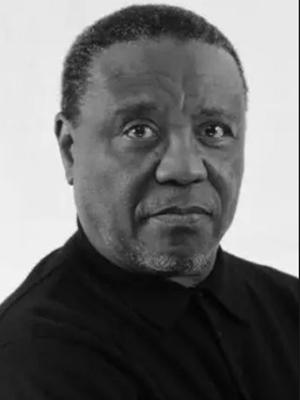
Throughout his own educational journey, Spencer Howard struggled to find a place where he felt he belonged. School never seemed to suit him. Until he became a teacher himself.
Born in Los Angeles, California in 1945, Howard spent his young years in Pinal County. Howard’s early education was marked by activism in the face of segregation.
“The school in Coolidge,” he remembered, “you know the white kids, they had grass and swing sets and slides.” Meanwhile, the all-black school in Pinal County lacked equipment. So, the parents and the principal worked together to raise money for a proper playground. They raised money by selling candy for several months, but the superintendent refused to allow them to build their playground in the end.
“He would not allow the school to purchase a swing set. That was the disparity.” But, Howard remembered, “they had a track meet once a year. Every year. Big track meet. All the schools would come to Coolidge once a year. That was the one time a year we were welcome to come to the Coolidge School District. Because we won all the trophies.”
His parents were cotton pickers, who relocated the family to the South Phoenix area in 1958 when mechanized cotton picking displaced their work. His parents purchased a house just north of Broadway on 20th Street.
“At the time, that was not South Phoenix,” Howard explained. The area south of the Salt River was still unincorporated, so most people simply called it “the county.” Howard’s family and neighbors called the area “Broadway.”
Howard attended South Mountain High School, but “I hated school.” He mostly focused on “fitting in,” wondering “am I going to pass?” He ended up leaving SMHS and earning a GED. He enrolled at Phoenix College in 1964, but did not know what he wanted to study or what career to pursue.
“I had no counseling, no real role models, no sense of what I could aspire to be,” said Howard.
As a result, he moved around, attending different schools and trying out different roles. That changed when he met Richard Harris, the first African American reporter of the Phoenix Gazette.
“Mr. Harris, when he retired, he started a youth program called Youth United on Central and Broadway,” said Howard.
Harris inspired a lot of urban writers to take up the pen. Howard began writing about Arizona history, “I came to love the written word.” He enjoyed writing so much he decided to become a teaching artist, a position which was hard to come by in Phoenix. Howard found a 5th grade teaching position in Louisiana, and when he saw how much the kids loved his storytelling, his writing, and his teaching, he realized he’d found his calling.
“One of my first two-act plays was called Freedom Summer and it’s been performed in a lot of places,” said Howard.
Howard’s contributions to South Phoenix remain. He assisted Helen K. Mason with founding the Black Theater Troupe, which has been active in South and downtown Phoenix since 1970. Howard stayed in contact with Richard Harris, and as a result wrote an award-winning script about an alcohol awareness program founded in South Phoenix.
Spencer Howard died on July 11, 2025. His final project, a multi-part documentary called Africans on the Mississippi was acclaimed but now remains unfinished. He was interviewed by SMCC faculty on behalf of South Phoenix Oral History Project faculty on April 8, 2021.
Written by Dr. Summer Cherland
Image originally published by Best Funeral Services West Valley Chapel; used here in remembrance of Spencer Howard.