Hoop of Learning
Program Overview
Maricopa Community Colleges’ Hoop of Learning (HOL) is an early high school-to-college bridge program available at nine of our ten colleges. Since its establishment in 1995, HOL’s intention is to reduce economic and cultural barriers that American Indian students may face while helping them transition from high school to college.
HOL is Indigenous by design, based on a traditional Native American worldview of a circle, or hoop, of lifelong development. Its mission is to encourage, support and create conditions that empower American Indian students to complete high school and transition successfully to higher education.
What We do
The HOL Program has four primary goals for its students:
- Support high school graduation
- Increase enrollment and participation in college
- Empower students to reach their goals
- Prepare students to succeed by removing barriers
High school sophomores, juniors, and seniors are recruited to participate in HOL. Once accepted into the program, HOL students are concurrently enrolled in high school and college courses, attending college classes during the summer and on Saturdays during the school year. HOL students can earn general studies college credits towards an associate’s degree and/or transfer to a university to earn their bachelor’s degree.
Who Qualifies?
The HOL program is looking for high school students who meet the following criteria:
- Must be a registered member of a state or federally recognized tribal nation.
- Must have a 2.0 minimum high school grade point average (GPA).
- Must be actively enrolled in high school and on track to graduate on time.
- Applicants can apply in the fall semester of their 10th or 11th grade year. SMCC starts a new cohort of students in the summer semester.
Hoop of Learning Locations
|
South Mountain Community College Main Campus:
|
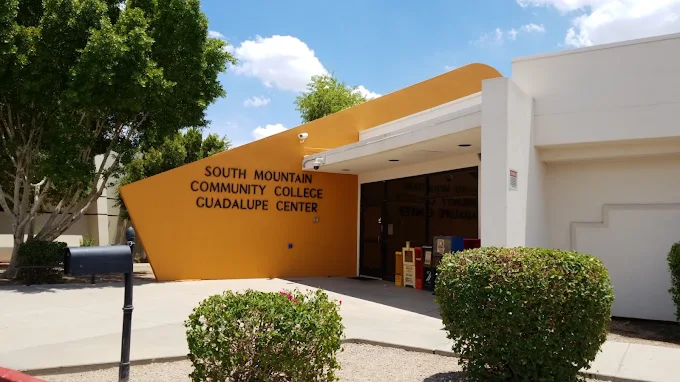
Guadalupe Center Campus:
|

Ready to Apply?
There are two steps to participate in the Hoop of Learning program:
Step 1: Submit the online HOOP of Learning application
- Make sure when applying you provide your Certification of Indian Blood documentation (CIB) OR Tribal ID
- You will have to create an account to access Dynamic Forms
- Video Instructions - https://www.youtube.com/watch?v=plyGIEq9ivQ&t=337s
Step 2: Our HOOP Coordinator will reach out to you with next steps.
Interested in Construction Trades?
Hoop of Learning has a pathway for students to earn their certificate in carpentry and electrical.
This opportunity is only available for you to apply during your sophomore year.
To learn more about ACE/HOL CTI Program click here!
Frequently Asked Questions (FAQ’s):
All classes taken in the HOL program follow the Arizona General Education Curriculum (AGEC). Courses that all college students are required to take such as English, Humanities, Social & Behavioral, and Communications.
Dual Enrollment.: SMCC’s Dual Enrollment Program is a great way for high school juniors and seniors to get a head start on their college education.
Questions regarding HOOP of Learning
Questions regarding HOOP of Learning
Main Campus: [email protected], 602-243-
Guadalupe Center: [email protected], 602-243-8340
*Tribes are distinct political entities with political sovereignty. Tribal sovereign nations have a government-to-government relationship with the U.S. government based on historical treaties, statues, and historical relations. Arizona is a unique state with 22 federally-recognized Native American tribes located within its borders. Maricopa Community Colleges recognizes the unique sovereign status of these tribes as well as those across the United States. As such, all scholarships offered to tribally enrolled members of a sovereign nation are not based on race or ethnicity but rather acknowledgement of tribal communities' unique political status recognized by the federal government and protected by the U.S. Constitution within the United States.